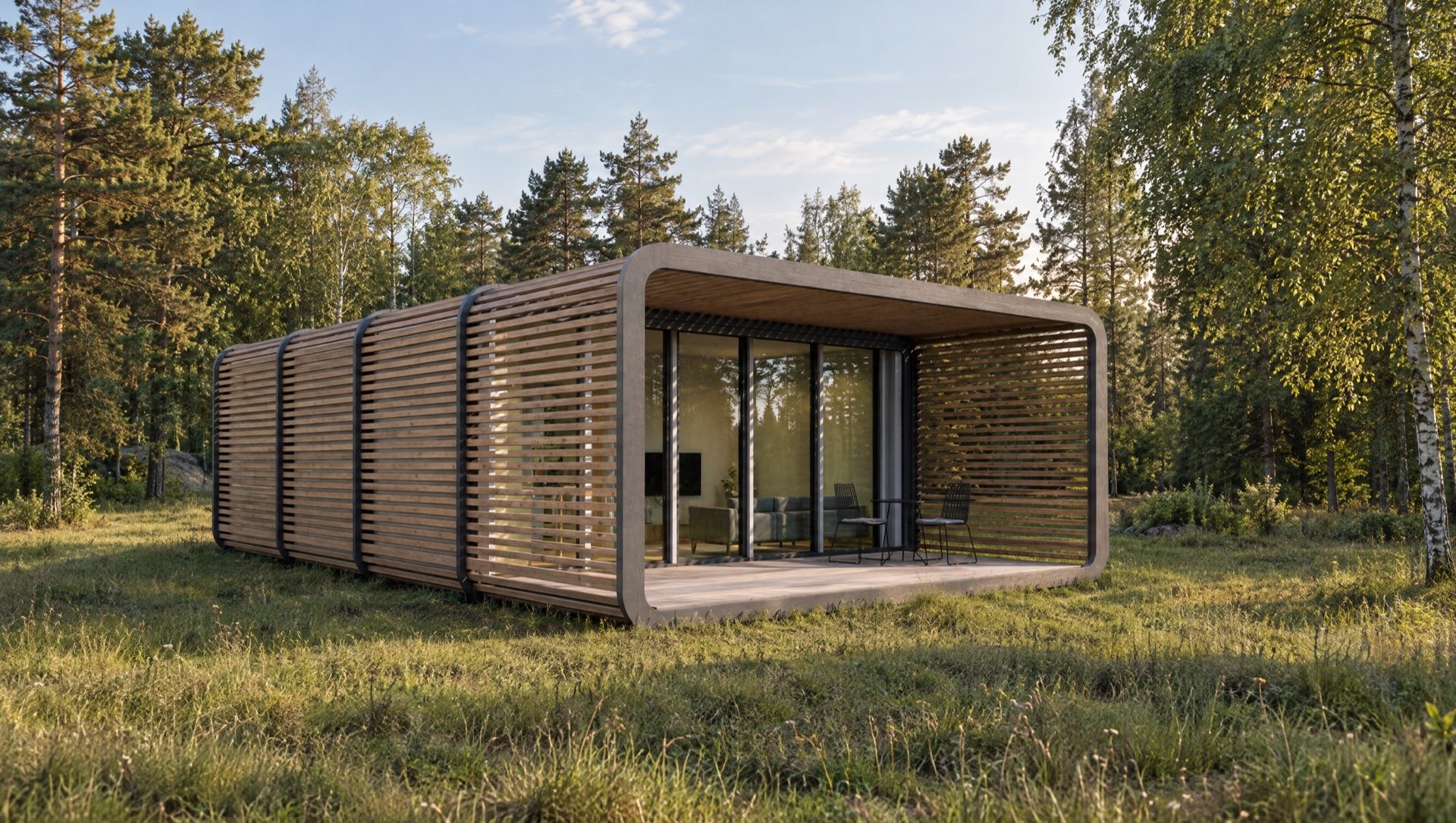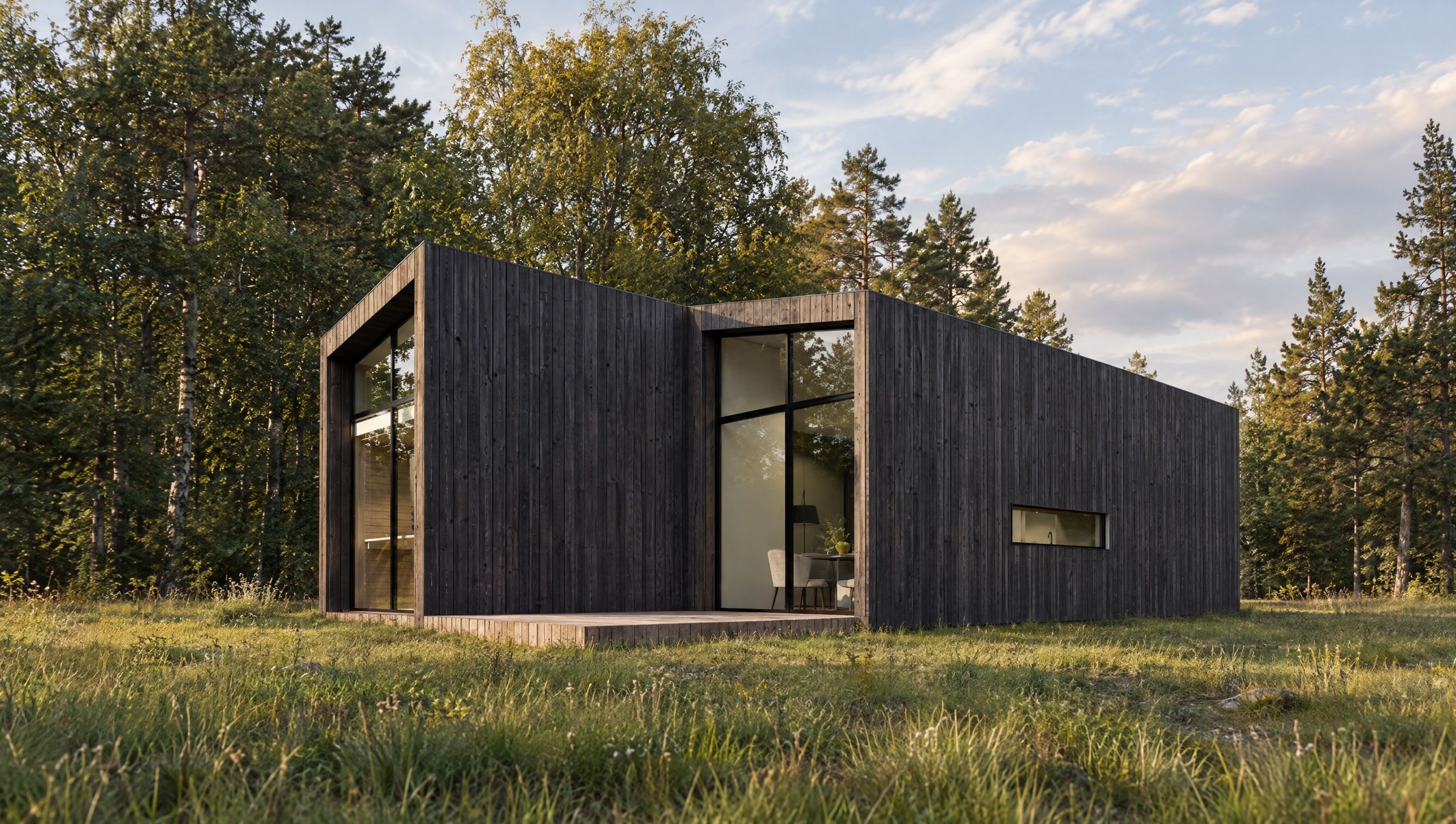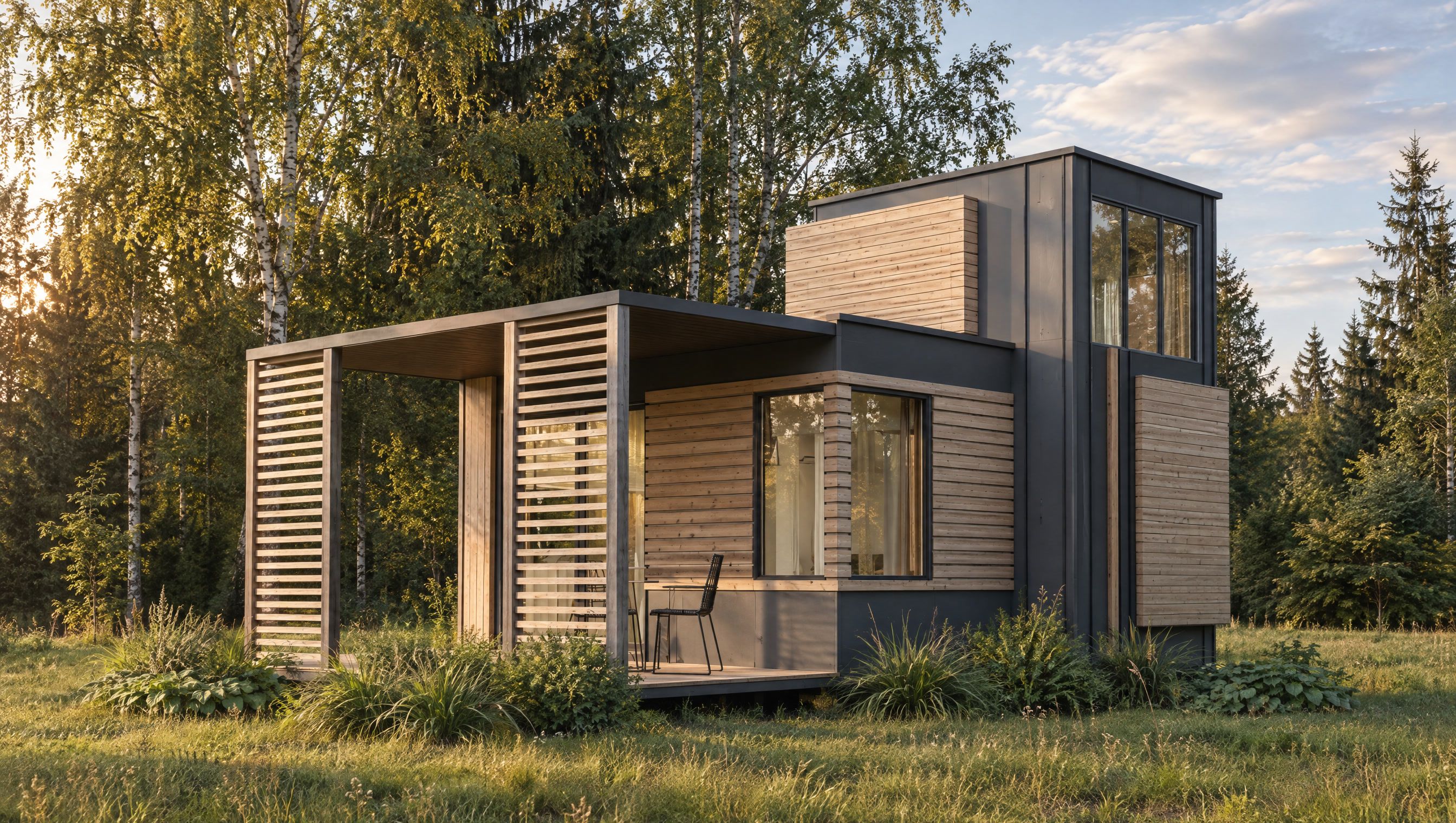
A small house in Estonia has to handle snow, wind and weeks below freezing. That is why every BalticHaus tiny house is built for year-round living in Scandinavian conditions, not just for summer weekends. Here is what goes into it.
A dense timber frame
The frame is the backbone of the house. We use a rigid frame of dense timber, built indoors in our workshop. The wood stays dry during the build, which matters for how the house performs for decades afterwards.
Because the frame is built to be lifted and transported, it is also stiffer than many site-built frames. A house that survives a road trip across Europe has no trouble with a winter storm.
200 mm of stone wool, all the way round
Heat escapes wherever insulation is thin. We put 200 mm of stone wool in the walls, the floor and the ceiling, so there is no weak side. In a small house, the floor matters as much as the walls: it is where you stand barefoot in the morning.
Stone wool does more than keep the heat in. It does not burn, it keeps its shape over time, and it dampens sound from rain on the roof or wind outside.
Triple-glazed windows
Large windows make a small house feel open, but they must not let the cold in. Every BalticHaus model has triple-glazed PVC windows with Rehau, Salamander or Gealan profiles. They keep the inside surface of the glass warm, which means less draught and less condensation in winter.
Heating a tiny house in winter
A well-insulated small house needs little energy to stay warm. In the Premium configuration, an air-to-air heat pump handles most of the heating and cools the house in summer. Electric radiators back it up on the coldest days, and the bathroom has electric underfloor heating.
Heat-recovery ventilation: fresh air without losing heat
A tight house needs controlled ventilation. Premium houses have ventilation with heat recovery by Blauberg. It replaces stale, humid air with fresh air from outside and warms the incoming air with heat from the outgoing air. The result is a dry, healthy indoor climate without opening windows in January.
Built where it is dry
Many problems in new houses start with moisture trapped during construction. Because we build indoors, the frame, insulation and interior go in dry and stay dry until the house is closed.
Built for local conditions
We have built houses for Estonia, Finland and other parts of Europe. Details such as the façade solution can be adapted to local requirements, and we plan them with you before production starts.